1. The core relationship between transmission ratio and power output
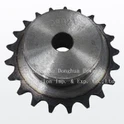
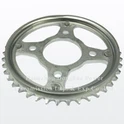
The sprocket size (usually expressed in the number of teeth) directly affects the speed ratio and torque transmission efficiency of the transmission system.
1. Small-sized drive sprocket (few teeth):
- When a small sprocket is installed on the driving shaft (such as the engine output shaft), if it is matched with a large-sized driven sprocket, the system will show the characteristics of high torque and low speed, which is suitable for scenes that require power output such as climbing and loading.
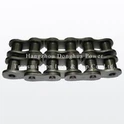
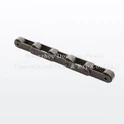
- However, a sprocket that is too small will increase the bending frequency of the chain, resulting in an increased risk of chain fatigue fracture.
2. Large-sized drive sprocket (many teeth):
- When matched with a small driven sprocket, the system tends to have high speed and low torque, which is suitable for scenes that pursue speed such as road racing.
- A large sprocket can reduce the contact stress between the chain and the tooth surface and extend the life of the transmission system, but it may affect the acceleration response due to increased inertia.
2. Balance between mechanical efficiency and energy loss
The sprocket size affects the overall efficiency through the following mechanisms:
1. Chain wrap angle and friction loss:
- Small sprockets will reduce the chain wrap angle, reduce the meshing area between the tooth surface and the chain, increase local wear and generate additional heat.
- Experimental data show that sprockets with less than 15 teeth may reduce transmission efficiency by 3-5%.
2. Resonance and vibration control:
- Large-size sprockets have more uniform mass distribution, which can reduce vibration harmonics during high-speed operation, reduce noise and improve stability.
3. Optimization selection of application scenarios
Adjust the sprocket size combination according to different needs:
1. Mountain bikes and off-road motorcycles:
- Use a small front sprocket + a large rear sprocket configuration to enhance climbing ability by reducing the speed ratio.
2. Racing and racing equipment:
- Choose a large front sprocket + a small rear sprocket to maximize the output speed, but it is necessary to use lightweight materials (such as titanium alloy) to offset the inertia effect.
3. Industrial machinery transmission:
- Choose a medium-sized sprocket (such as 20-40 teeth) according to load fluctuations to balance durability and power requirements.
IV. Maintenance cost and replaceable design
Modern sprocket systems (such as removable rim design) allow users to quickly replace gear rings of different sizes without replacing the entire hub. This modular design reduces maintenance costs and supports dynamic adjustment of transmission performance according to working conditions.
Summary
Sprocket size is the core variable in transmission system design, and power requirements, efficiency loss and equipment life must be considered comprehensively. By scientifically matching the number of teeth and adopting replaceable structures, the adaptability and economy of the mechanical system can be significantly improved. In practical applications, it is recommended to refer to the equipment manual or optimize parameters through dynamic simulation software.