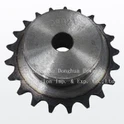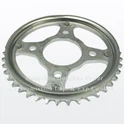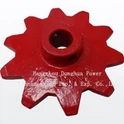
1. Sprocket should be installed on the shaft without skew and swing.
The end faces of the two sprockets in the same transmission assembly shall be located in the same plane. When the center distance of the sprockets is less than 0.5 meters, a deviation of 1 mm shall be allowed.
If the center of the sprocket is more than 0.5 meters apart, a deviation of 2 mm is allowed.
But do not allow friction sprocket teeth side phenomenon, if the two wheel braided too large easy to produce chain and accelerated wear.
Care must be taken to check and adjust offsets when replacing sprockets.
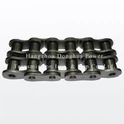
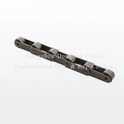
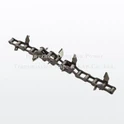
2. Hoisting chain tightness should be appropriate, too tight to increase power consumption, bearing easy to wear;
Too loose chain is easy to jump and take off.
The tightness of the chain is as follows: lift or press down from the middle of the chain, and the center distance of the two sprockets is about 2%-3%.
3. The new lifting chain is too long or stretched after use, so it is difficult to adjust. The link can be removed according to the situation, but it must be an even number.
The link shall pass through the back of the chain, and the lock plate shall be inserted outside. The opening of the lock plate shall be in the opposite direction of rotation.
4. After sprocket wear is serious, new sprocket and new chain should be replaced at the same time to ensure good meshing.
New chains or sprockets cannot be replaced alone.
Otherwise, it will cause bad meshing to accelerate the wear of new chains or sprockets.
Sprocket tooth surface wear to a certain extent should be turned over in time to use (refers to the adjustable surface of the sprocket used).
To extend the use time.
5. The old lifting chain cannot be mixed with some new chains, otherwise it is easy to produce impact in the transmission and break the chain.
6. Lifting chain in the work must remember to fill lubricating oil in time.
The lubricating oil must enter the fit clearance between the roller and the inner sleeve in order to improve working conditions and reduce wear.