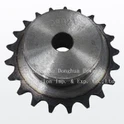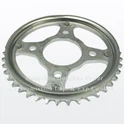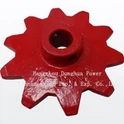
It can be divided into cylindrical gears, bevel gears, non-circular gears, racks, worms and worm gears according to its shape; it is divided into spur gears, helical gears, herringbone gears, curve gears according to the shape of the tooth line; Gears, internal gears; can be divided into cast gears, cut gears, rolled gears, sintered gears, etc. according to the manufacturing method.
The gear load capacity of the soft tooth surface is low, but it is relatively easy to manufacture and has good running characteristics. It is mostly used in general machinery with no strict restrictions on transmission size and weight, and small-scale production. Because of the heavier burden of the small gears in the paired gears, in order to make the working life of the small and large gears approximately equal, the hardness of the tooth surface of the small gear is generally higher than that of the large gear.
The hard-tooth surface gear has a high load-bearing capacity. It is subjected to quenching, surface quenching or carburizing quenching after the gear is finely cut to increase the hardness. However, during heat treatment, the gear will inevitably be deformed, so after the heat treatment, grinding, grinding or fine cutting must be performed to eliminate the error caused by the deformation and improve the accuracy of the gear