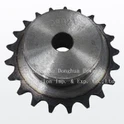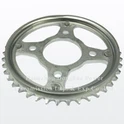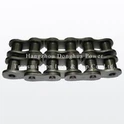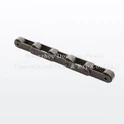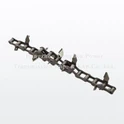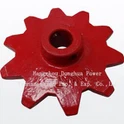
Sprocket ratio, also known as gear ratio in the context of chain-driven systems, is a fundamental concept in mechanical engineering and various practical applications such as bicycles, motorcycles, and industrial machinery. Understanding the sprocket ratio is crucial for optimizing performance, efficiency, and overall functionality of these systems. In this article, we will explore what sprocket ratio is, how it is calculated, and its significance in different applications.
Definition of Sprocket Ratio
The sprocket ratio is the ratio of the number of teeth on the driving sprocket (the one powered by the engine or pedal) to the number of teeth on the driven sprocket (the one that turns the wheel or another component). This ratio determines how many times the driven sprocket rotates for every full rotation of the driving sprocket.
Calculation of Sprocket Ratio
To calculate the sprocket ratio, you need to know the number of teeth on both the driving and driven sprockets. The formula is:
\[ \text{Sprocket Ratio} = \frac{\text{Number of Teeth on Driving Sprocket}}{\text{Number of Teeth on Driven Sprocket}} \]
For example, if the driving sprocket has 20 teeth and the driven sprocket has 40 teeth, the sprocket ratio would be:
\[ \text{Sprocket Ratio} = \frac{20}{40} = 0.5 \]
This means that for every full rotation of the driving sprocket, the driven sprocket rotates half a turn.
Significance of Sprocket Ratio
1. Speed and Torque
The sprocket ratio directly affects the speed and torque of the system. A higher sprocket ratio (closer to 1 or greater than 1) means that the driven sprocket rotates fewer times for each rotation of the driving sprocket, resulting in higher torque but lower speed. Conversely, a lower sprocket ratio (less than 1) results in higher speed but lower torque.
2. Efficiency
The choice of sprocket ratio can impact the efficiency of the system. For instance, in bicycles, a well-chosen sprocket ratio can help maintain an optimal pedaling cadence, reducing fatigue and improving overall performance.
3. Wear and Tear
The sprocket ratio can also influence the wear and tear of the components. A ratio that is too high or too low may lead to increased stress on the chain, sprockets, and other moving parts, potentially shortening their lifespan.
Applications of Sprocket Ratio
1. Bicycles
In bicycles, the sprocket ratio is determined by the combination of the front chainring and the rear sprocket. Cyclists often adjust this ratio to suit different terrains and riding conditions. For example, a lower ratio is preferred for climbing steep hills, while a higher ratio is used for cruising on flat surfaces.
2. Motorcycles
Motorcycles also rely on sprocket ratios to optimize performance. Riders may change the sprockets to achieve desired acceleration and top speed. Off-road motorcycles often use different ratios compared to street bikes to accommodate varying riding conditions.
3. Industrial Machinery
In industrial settings, sprocket ratios are used to drive conveyor belts, assembly lines, and other mechanical systems. Proper selection of sprocket ratios ensures smooth operation and maximizes productivity.
Conclusion
Understanding the sprocket ratio is essential for anyone working with chain-driven systems. Whether you're a cyclist looking to improve your ride, a motorcyclist tuning your bike, or an engineer designing industrial machinery, knowing how to calculate and apply sprocket ratios can significantly enhance performance and efficiency. By carefully selecting the appropriate sprocket ratio, you can achieve the desired balance of speed, torque, and durability, ensuring optimal operation of your mechanical systems.
Dec 13, 2024
What is Sprocket Ratio?
Send Inquiry
Product Categories
Latest Products