
I. Basic Functions of Sprockets in Transmission
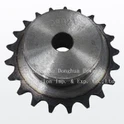
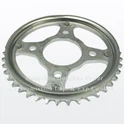
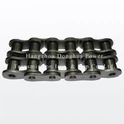
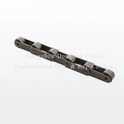
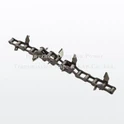
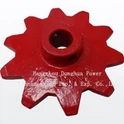
Sprockets are very important workpieces in ring transmission equipment and are widely used in engineering, mining, machinery and other fields. They are mainly gear structures, and the sprocket workpiece processing is completed by a general milling machine. In the transmission system, the sprocket and the chain cooperate to transfer power from one component to another. The size of the sprocket has a vital impact on the accuracy, stability and efficiency of the entire transmission process.
II. Basic Parameters of Sprockets
1. Number of Teeth (z)
- The number of teeth is a key parameter of the sprocket. Different numbers of teeth are suitable for different working conditions. For example, sprockets with 19 teeth or more are generally used for active sprockets running under medium and high speeds and normal working conditions; 17 teeth are only used for small pitch active sprockets; 23 teeth or more are recommended for impact situations. When the speed ratio is low, the use of high-tooth sprockets can greatly reduce the rotation of the chain links, the tensile load of the chain and the load on the bearings.
- The number of teeth also plays an important role in calculating other dimensions of the sprocket, such as the pitch circle diameter and the tooth tip circle diameter.
2. Pitch (p)
- The pitch is a basic parameter of the chain and one of the important parameters of the sprocket. The pitch is a standard value, and common pitch values are 8, 9.525, 12.7, 15.875, 19.05, 25.4, 31.75, 38.1, 44.45, 50.8, etc.
- The calculation of the pitch circle diameter and other dimensions of the sprocket is closely related to the pitch. For example, the pitch circle diameter d = p/sin(180°/z).
3. The maximum outer diameter (d1) and row pitch (pt) of the sleeve
- These parameters are also basic parameters of the sprocket, and are of great significance in the design of the sprocket and the matching with the chain. They are compatible with other dimensions of the sprocket and the specifications of the chain to ensure the normal operation of the entire transmission system.
3. Calculation of the main dimensions of the sprocket
1. Pitch circle diameter (d)
- The calculation formula is d = p/sin(180°/z). This diameter is an important theoretical dimension on the sprocket. In the design and analysis of the sprocket, it is one of the key factors to determine the meshing relationship between the sprocket and the chain.
- For example, when the pitch p and the number of teeth z are known, the pitch circle diameter can be accurately calculated. Different pitch and number of teeth combinations will result in different pitch circle diameters, which directly affects the matching accuracy of the sprocket and the chain.
2. Tooth tip circle (outer diameter) (D)
- The calculation formula for the tooth tip circle diameter is D = p×(0.54+cot180°/z). The tooth tip circle diameter determines the outermost contour size of the sprocket.
- In practical applications, this dimension has an important influence on the spatial layout relationship between the sprocket and other components. For example, when installing the sprocket, it is necessary to consider whether its tooth tip circle diameter will interfere with the surrounding components.
4. Relationship between sprocket size and transmission performance
1. Impact on speed
- The number of teeth and pitch of the sprocket will affect the movement speed of the chain. At the same input speed, the sprocket with a higher number of teeth has a relatively more stable movement speed due to the reduction in the rotation of the chain links, which helps to achieve more precise speed control.
- Different pitches will also affect the linear speed of the chain. When driven by the sprocket, the chain with a larger pitch travels a longer distance per rotation of one chain link, and has a higher linear speed at the same speed.
2. Impact on load
- As mentioned earlier, when the speed ratio is low, a high-tooth sprocket can reduce the rotation of the chain links, the tensile load of the chain, and the load on the bearings. The appropriate sprocket size can make the force between the chain and the sprocket more uniform during the power transmission process, reducing the situation of local stress concentration.
- If the sprocket size is not properly selected, for example, the pitch is too large and the number of teeth is too small, the chain may be subjected to excessive tension during the meshing process, which may easily cause the chain to be stretched and deformed or even broken, and will also increase the load on the bearings and reduce the service life of the entire transmission system.
V. Sprocket standard size parameter table
The basic parameters of the sprocket are the pitch p of the accompanying chain, the maximum outer diameter d1 of the sleeve, the row spacing pt and the number of teeth z. The main dimensions and calculation formulas of the sprocket have been introduced, as well as parameters such as the maximum allowable diameter of the sprocket hub hole. These parameters follow certain standards, such as GB/T10855-2016 Toothed Chain and Sprocket Standard. The sprocket standard size parameter table in this standard provides an important basis for the design, manufacture and selection of sprockets.