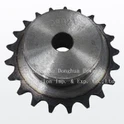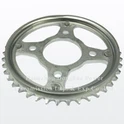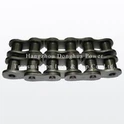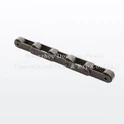
When the task involves lifting multi-ton loads, dragging raw timber, or moving mountains of ore, the components within the machinery cannot afford to be the weakest link. In these sectors-mining, construction, heavy logistics, and forestry-the operational environment is a relentless test of endurance. Abrasive dust, corrosive moisture, monumental static loads, and devastating shock impacts are daily realities. The chains used here are not merely links; they are engineered safety components. For equipment manufacturers and operators in these fields, the primary pain points are unequivocal: catastrophic failure risk, operator safety, and the astronomical cost of downtime in capital-intensive projects.
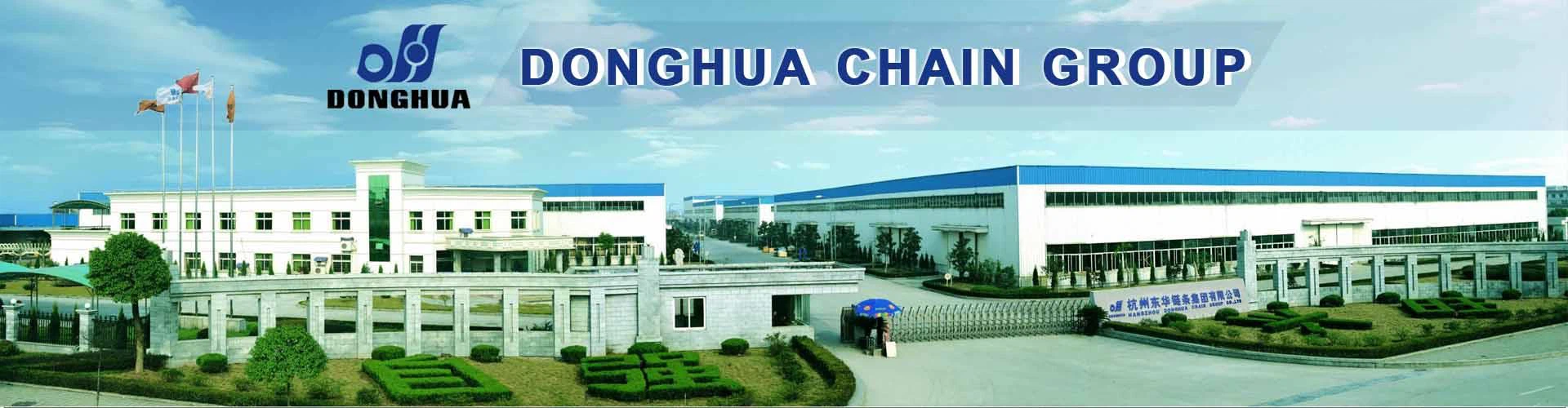
This is the domain of the Engineering Chain. It is a category defined by its purpose: to perform reliably where standard chains would rapidly fail. At Hangzhou Donghua Chain Group, our expertise in developing heavy-duty cranked link transmission chains, Hoisting Chains, and specialized Forged Chains is born from a deep understanding of these extreme conditions. We don't just manufacture to a catalog; we engineer solutions for the edge of operational feasibility.
The Anatomy of Strength: Manufacturing for Extreme Duty
The journey to ultimate strength often begins at the forge. Forged Chains represent the pinnacle of toughness for applications like anchor chains, heavy-duty slings, or dragline excavators. The forging process involves heating high-quality alloy steel and shaping it under tremendous pressure. This aligns the metal's grain flow to the contours of the link, creating a continuous, unbroken structure that offers superior resistance to impact and fatigue compared to chains made from cut or bent steel. The forged link has no welds in its high-stress areas, eliminating a potential point of weakness. We control every parameter of this process-temperature, pressure, cooling rate-to ensure the resultant chain delivers consistent, certified mechanical properties.
For Hoisting Chains, used in cranes, hoists, and stereo garage chains systems, the priority is a combination of high tensile strength, precise dimensional tolerance, and fatigue life. These chains are frequently heat-treated to achieve an optimal balance of surface hardness for wear resistance and core toughness for load-bearing capacity. Each batch undergoes destructive and non-destructive testing, including magnetic particle inspection, to uncover any subsurface defects that could compromise integrity under load. The goal is absolute predictability; every chain that leaves our facility must perform identically under its rated working load limit.
Solving Application-Specific Monsters: Abrasion, Impact, and Corrosion
The Abrasion Challenge in Mining and Quarrying: Chains on bucket elevators, conveyors, and draglines are constantly assaulted by abrasive materials. Standard hardening can be defeated. Our approach for such Conveyor Chains or Engineering Chain applications often involves specialized treatments like induction hardening of pin and bushing surfaces to create an exceptionally deep and hard wear zone. We may also design chains with increased clearances or incorporate wear plates to protect critical link surfaces, dramatically extending service life in environments where replacement intervals are measured in material tonnage moved, not just time.
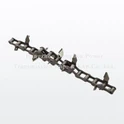
Managing Shock Loads in Forestry and Construction: A grapple hitting a log, a dragline bucket encountering a rock shelf-these events generate shock loads that can exceed the static load by multiples. Engineering for this requires a focus on dynamic strength and energy absorption. We select steel grades with high impact toughness (measured by Charpy V-notch tests) and design link geometries, such as those in our heavy-duty cranked link transmission chains, to provide flexibility and stress distribution that dampens shock pulses before they can transfer destructively to the drive system.
Corrosion in Marine and Offshore Applications: Strength is useless if it rusts away. For applications exposed to saltwater or harsh chemicals, we offer solutions in Stainless Chains. Using grades like 304 or 316 stainless steel, we manufacture chains that sacrifice nothing in strength while gaining formidable corrosion resistance. This is critical for marine hardware, food processing Conveyor Chains, or any application where hygiene and environmental resistance are paramount.
From Design to Duty: A Certified Partnership
Our capability extends beyond production. With our investment in technology and new product development, we engage in collaborative design. We can work with OEM engineers to model custom chain configurations, perform virtual stress analysis, and prototype solutions for unique applications, be it a novel stereo garage chains system or a custom Forged Chains assembly for a new generation of construction equipment.
Your machinery is built to conquer the toughest jobs on earth. The chains within it should be engineered with the same ethos. We provide not just a product, but a certificate of reliability-documented proof of materials, heat treatment, and load testing-that becomes part of your equipment's quality assurance and safety documentation.
Don't let your chain be the calculated risk in your heavy equipment design. Partner with Donghua for engineered chains that are built to endure. Contact our heavy-duty applications division to discuss your technical specifications and request a failure mode analysis for your current chain setup.