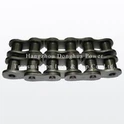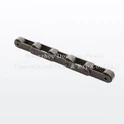
When choosing chain lubricants, we also need to make decisions based on specific environments and riding needs. This is just like choosing a bicycle. Different models, such as mountain bikes and road bikes, are suitable for different terrains and road conditions. Therefore, when choosing chain lubricants, you also need to make appropriate choices based on the actual usage scenarios.
Many cyclists may not know that the common chain lubricants on the market are divided into two categories: dry and wet. Among them, dry chain oil is known for its low viscosity characteristics, which can effectively prevent the chain from getting dusty and is very suitable for use in sunny weather. However, its disadvantage is that the lubrication cycle is relatively short, and it needs to be reapplied about every 100 kilometers of riding.
Next, let's explore the advantages and disadvantages of wet chain oil. Wet chain oil presents a viscous water drop shape. Its significant advantages are high viscosity, long service life, and no frequent addition. In addition, it can effectively resist the erosion of rainwater, which is very suitable for environments with changeable climates. However, its disadvantage is also obvious, that is, the chain is prone to blackening and stickiness due to use. In summary, no matter which type of chain oil you choose, regular oiling is essential, which not only improves pedaling efficiency, but also reduces wear on the flywheel and chain.
When choosing a chain lubricant, we should focus on its waterproof and rust-proof performance, durability, and cleanliness, that is, its ability to resist dirt and dust on the chain. The higher these performance indicators, the better the lubricant effect is.
In terms of type, chain lubricants are mainly divided into two categories: dry lubricants and wet lubricants. Dry lubricants are made by dissolving a lubricating substance in a liquid or solvent, allowing it to flow between the chain pins and rollers, and then the liquid quickly evaporates, leaving a dry or nearly dry lubricating film. Although it is called a dry lubricant, its application still needs to be carried out by spraying or applying.
In the field of dry lubricants, we often encounter some key additives, such as paraffin, PTFE (i.e. Teflon or polytetrafluoroethylene), and "ceramic" lubricants. Paraffin-based lubricants perform well in dry environments, but may need to be replenished regularly due to their lack of fluidity and durability. PTFE, known for its excellent lubricity, water resistance and stain resistance, tends to last longer than paraffin lubricants, but may be more susceptible to dirt. "Ceramic" lubricants, which contain synthetic ceramic components such as boron nitride, have excellent high temperature resistance, but their advantages are not outstanding in bicycle chain applications.
It is worth noting that there are also some products on the market that combine the characteristics of dry lubricants and wet lubricants. These products are able to dry after application while still maintaining a certain degree of wetness, thus achieving a good balance in terms of water resistance, rust resistance and stain resistance. This balance is usually achieved by adjusting the formula of the lubricant or adding more fat.
In short, when choosing a chain lubricant, we must take into account the environment in which the bicycle will be used, the material of the chain, and personal preference. The right lubricant selection is the key to ensuring smooth operation and extending the life of the chain. These lubricants praised as all-weather lubricants are not simply dry lubricants or wet lubricants, but a combination of the advantages of both. Wet chain lubricants, as a type of wet lubricant, are usually based on a certain type of oil and have unique properties. However, gear oil, although it contains EP (extreme pressure) additives and performs well under extreme pressure, is not suitable for bicycle chain lubrication because cyclists do not usually put such great pressure on the chain when riding.
Motor oil, especially single-grade engine oil designed for gasoline engines, can be an ideal bicycle chain lubricant. This type of oil contains relatively few detergents and other additives that may cause damage to bicycle chains. In addition, the easy availability of engine oil is also a big advantage.
On the other hand, sewing machine oil, a fine oil with a lower viscosity, can effectively provide corrosion protection for the chain. Its excellent resistance to water washout and ability to absorb dirt make it another lubricant option worth considering.
Paraffin oil, a highly refined mineral oil, can vary in viscosity and can be diluted with diesel to adjust its properties. Although its water and corrosion resistance are average, it is worth mentioning that paraffin oil is very clean and will not leave difficult-to-clean stains on the chain. If you accidentally get it on your clothes, it can be easily removed.
Turbine oil, an industrial oil, stands out for its excellent water resistance and rust protection. Although it adheres to less dirt, it is usually difficult to buy separately and is mostly sold in barrels. In contrast, hydraulic oil is more easily available in small packages and is more convenient to use. Chainsaw oil, known for its excellent adhesive properties, can adhere tightly to the chain, providing excellent rust protection and resistance to water washout. However, it should be noted that chainsaw oil easily absorbs a lot of dirt and needs to be diluted appropriately when used.
Speaking of WD-40, this multifunctional product is amazing, but it is not suitable as a lubricant for bicycle chains. It has poor lubrication properties and is more suitable for cleaning and rust removal. If used to lubricate bicycle chains, it needs to be replenished frequently, has poor durability, and has an increased risk of chain falling off. Regarding the composition of lubricants, due to "trade secrets", products sold on the market are often not labeled in detail. Even if they are disclosed, they are limited to some additives, such as TFE, "ceramics", boron nitride, graphite, paraffin, etc. It is worth mentioning that mixing chainsaw oil with diesel often achieves the desired effect.