Hey there! If you're in the world of machinery and engineering or just a gear enthusiast like me, you've probably wondered, "How on earth do I design a gear system?" Well, sit back and relax because I'm here to break it down for you. And as a gear supplier, I've got some real - world insights to share.
Understanding the Basics
First things first, let's get the basics out of the way. Gears are all about transmitting power and motion from one part of a machine to another. They're used in everything from simple toys to high - tech cars and industrial machinery. The most common types of gears you'll come across are spur gears, bevel gears, and worm gears.
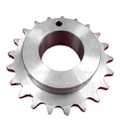
Spur gears are the simplest type. They have straight teeth and are used when the shafts are parallel. They're easy to manufacture and are great for applications where high - speed and low - noise aren't the top priorities. If you're interested in spur gears, you can check out our Stainless Steel Spur Gears. They're made of high - quality stainless steel, which means they're durable and resistant to corrosion.
Bevel gears, on the other hand, are used when you need to transmit power between intersecting shafts, usually at a 90 - degree angle. ANSI Standard Stainless - Steel Bevel Gears are a popular choice in many industries. They're designed to meet strict standards, ensuring smooth operation and long - lasting performance. You can find more about them here.
Worm gears are used when you need a high reduction ratio in a small space. They consist of a worm (which looks like a screw) and a worm wheel. They're great for applications where you need to slow down the speed and increase the torque.
Defining the Requirements
Before you start designing a gear system, you need to know exactly what you want it to do. Here are some key questions you should ask yourself:
- What kind of power do you need to transmit? This is usually measured in horsepower (HP) or kilowatts (kW). The more power you need to transmit, the larger and stronger the gears will need to be.
- What's the speed ratio you're aiming for? The speed ratio is the ratio of the input speed to the output speed. For example, if you want the output shaft to rotate at half the speed of the input shaft, the speed ratio is 2:1.
- What's the operating environment like? If the gear system will be used in a harsh environment, such as a dusty or wet place, you'll need to choose gears that are resistant to these conditions.
Selecting the Right Gear Materials
The material you choose for your gears can have a big impact on their performance and lifespan. Here are some common gear materials and their properties:
- Steel: It's strong, durable, and can handle high - loads and high - speeds. There are different types of steel, such as carbon steel and alloy steel, each with its own advantages.
- Cast iron: It's relatively inexpensive and has good damping properties, which means it can reduce noise and vibration. However, it's not as strong as steel.
- Plastic: It's lightweight, inexpensive, and can be molded into complex shapes. It's also resistant to corrosion and can operate quietly. But it's not as strong as metal gears and may not be suitable for high - load applications.
Calculating the Gear Dimensions
Once you've defined your requirements and selected the gear materials, it's time to calculate the gear dimensions. This can be a bit tricky, but don't worry, I'll walk you through the main steps.
The first thing you need to calculate is the pitch diameter. The pitch diameter is the diameter of an imaginary circle that the gear teeth seem to roll on. It's calculated using the following formula:


[d = \frac{N}{P}]
where (d) is the pitch diameter, (N) is the number of teeth, and (P) is the diametral pitch (a measure of the tooth size).
You also need to calculate the center distance between the gears. The center distance is the distance between the centers of the two meshing gears. It's calculated using the following formula:
[a=\frac{d_1 + d_2}{2}]
where (a) is the center distance, (d_1) is the pitch diameter of the first gear, and (d_2) is the pitch diameter of the second gear.
Designing the Gear Teeth
The design of the gear teeth is crucial for the smooth operation of the gear system. The most common tooth profile is the involute profile. An involute profile ensures that the gears mesh smoothly and transmit power evenly.
When designing the gear teeth, you need to consider the following factors:
- Tooth thickness: The tooth thickness affects the strength of the gear. A thicker tooth can handle more load, but it also takes up more space.
- Tooth height: The tooth height affects the meshing of the gears. If the tooth height is too small, the gears may not mesh properly. If it's too large, the gears may interfere with each other.
Lubrication and Maintenance
Proper lubrication is essential for the long - life of a gear system. Lubrication reduces friction between the gear teeth, which in turn reduces wear and tear and heat generation. There are different types of lubricants available, such as oil and grease. The type of lubricant you choose depends on the operating conditions of the gear system.
Regular maintenance is also important. You should check the gears for wear and damage regularly and replace any worn - out parts as soon as possible.
Automobile Gear - Box Gear Hub
In the automotive industry, gear systems play a crucial role. One important component is the Gear Hub of Automobile Gear - Box. It's responsible for transmitting power from the engine to the wheels. The design of the gear hub needs to be precise to ensure smooth gear shifting and efficient power transmission.
Contact Us for Your Gear Needs
If you're planning to design a gear system or need high - quality gears for your project, we're here to help. As a gear supplier, we have a wide range of gears available, including the ones mentioned above. Whether you need a small batch for a prototype or a large quantity for mass production, we can meet your requirements.
Our team of experts is always ready to provide technical support and advice. We can help you select the right gears, calculate the dimensions, and ensure that your gear system works smoothly.
So, if you're interested in working with us, don't hesitate to reach out. We're looking forward to discussing your project and finding the perfect gear solutions for you.
References
- "Machinery's Handbook" - A comprehensive reference book for mechanical engineering, which contains a lot of information about gear design and manufacturing.
- "Design of Machine Elements" - Another great resource for learning about gear system design and other machine element design concepts.