


As a leading supplier of Standard Universal Joints, I've witnessed firsthand the pivotal role these components play in various mechanical systems. In this blog, I'll delve into the inner workings of a Standard Universal Joint, exploring its design, functionality, and applications.
Design and Structure
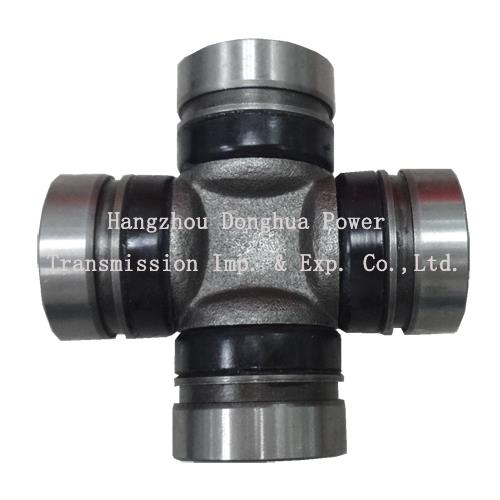
A Standard Universal Joint, also known as a Cardan joint, consists of two yokes and a cross-shaped intermediate piece called the cross or spider. The yokes are typically attached to the shafts that need to be connected, while the cross is positioned between them. Each end of the cross fits into a bearing in the yoke, allowing for rotational movement.
The bearings are crucial components that enable smooth and efficient operation. They reduce friction between the cross and the yokes, ensuring minimal energy loss and wear. The Cross and Bearing Kit we offer is designed to provide high-quality bearings that can withstand the rigors of continuous use.

How It Works
The basic principle behind a Standard Universal Joint is to transmit rotational motion between two shafts that are not in a straight line. When one shaft rotates, the cross in the joint also rotates. As the cross moves, it transfers the rotational force to the other shaft through the yokes and bearings.
The key feature of a Universal Joint is its ability to accommodate angular misalignment between the two shafts. This means that the shafts can be at an angle to each other, and the joint will still be able to transmit power effectively. The amount of angular misalignment that a joint can handle depends on its design and size.
Let's take a closer look at the movement of a Universal Joint. When the input shaft rotates, the cross pivots around its axes within the bearings. This pivoting action allows the output shaft to rotate in a different plane, following the movement of the input shaft. The joint essentially converts the rotational motion from one shaft to another, even when they are not parallel.
Advantages of Standard Universal Joints
One of the main advantages of Standard Universal Joints is their simplicity and reliability. They have a relatively simple design with few moving parts, which makes them easy to install and maintain. This also reduces the likelihood of mechanical failures, ensuring long-term performance.
Another advantage is their ability to transmit high torque. Universal Joints can handle significant amounts of power, making them suitable for a wide range of applications, from automotive to industrial machinery.
In addition, Universal Joints are highly versatile. They can be used in various configurations, depending on the specific requirements of the application. For example, they can be used in single or double joint arrangements to accommodate different levels of angular misalignment.
Applications
Standard Universal Joints are widely used in many industries due to their unique properties. Here are some common applications:
- Automotive Industry: In vehicles, Universal Joints are used in the driveshaft to transmit power from the transmission to the wheels. They allow the driveshaft to flex as the vehicle moves over uneven terrain, ensuring smooth power delivery. The Universal Joint Of Auto Parts Universal Joint is specifically designed for automotive applications, providing reliable performance and durability.
- Industrial Machinery: Universal Joints are used in a variety of industrial equipment, such as conveyors, pumps, and generators. They help to transfer power between different components of the machinery, even when there is some misalignment between the shafts.
- Agricultural Equipment: In farming machinery, Universal Joints are used to transmit power from the tractor's engine to various implements, such as plows and harvesters. They allow for flexibility in the operation of the equipment, adapting to different field conditions.
Maintenance and Care
To ensure the optimal performance and longevity of Standard Universal Joints, proper maintenance is essential. Here are some tips:
- Lubrication: Regular lubrication of the bearings is crucial to reduce friction and wear. Use a high-quality lubricant recommended by the manufacturer.
- Inspection: Periodically inspect the joints for signs of wear, such as excessive play or damage to the bearings. Replace any worn or damaged parts immediately.
- Alignment: Ensure that the shafts are properly aligned to prevent excessive stress on the joint. Misalignment can lead to premature wear and failure.
Conclusion
In conclusion, Standard Universal Joints are essential components in many mechanical systems. Their ability to transmit rotational motion between non - parallel shafts, along with their simplicity, reliability, and versatility, makes them a popular choice in various industries.
As a supplier of Standard Universal Joints, we are committed to providing high - quality products that meet the diverse needs of our customers. Whether you are in the automotive, industrial, or agricultural sector, our Universal Joint Of Auto Parts Cross Kit and other related products can offer the performance and durability you require.
If you are interested in purchasing Standard Universal Joints for your application, we invite you to contact us for a detailed discussion. Our team of experts is ready to assist you in selecting the right product and providing any technical support you may need.
References
- "Mechanical Design Handbook" by Robert C. Juvinall and Kurt M. Marshek
- "Automotive Engineering Fundamentals" by Thomas D. Gillespie


