


Hey there! As a supplier of standard couplings, I often get asked about the damping capacity of these nifty components. So, let's dive right in and explore what damping capacity really means when it comes to standard couplings.
First off, what's damping? In simple terms, damping is all about reducing vibrations and oscillations. When a machine is running, it can generate a whole bunch of vibrations. These vibrations can cause all sorts of problems, like premature wear and tear on parts, noise, and even affect the overall performance of the machinery. That's where the damping capacity of a coupling comes into play.
A standard coupling acts as a link between two shafts in a machine. Its job is not only to transmit power from one shaft to the other but also to handle misalignments and reduce vibrations. The damping capacity of a coupling refers to its ability to absorb and dissipate the energy of these vibrations.
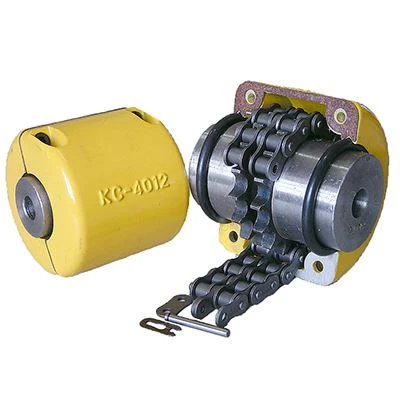
There are different types of standard couplings, and each has its own unique damping characteristics. For example, the Roller Chain Couplings are known for their durability and decent damping capabilities. They use a chain to connect two sprockets on the shafts. The chain has some flexibility, which allows it to absorb a certain amount of shock and vibration. When the machine experiences a sudden jolt or change in load, the chain can stretch and contract slightly, absorbing the energy and reducing the impact on the shafts.
Another type is the Standard Flexible Chain Socket Nm Coupling. This coupling is designed with flexibility in mind. It has a unique socket design that allows for some angular and parallel misalignment between the shafts. The flexible elements in this coupling, like rubber or elastomeric materials, are great at damping vibrations. These materials can deform under the influence of vibrations and then return to their original shape, dissipating the energy in the process.
Now, let's talk about why damping capacity is so important. In industrial applications, where machines are running at high speeds and under heavy loads, vibrations can be a real headache. Excessive vibrations can lead to increased maintenance costs, as parts wear out faster. They can also cause safety issues, especially in machinery where precision is crucial. For example, in a manufacturing plant, vibrations in a conveyor system can cause products to shift or fall off, leading to production delays and waste.
A coupling with good damping capacity can help mitigate these problems. By reducing vibrations, it can extend the lifespan of the shafts, bearings, and other connected components. It also improves the overall efficiency of the machine, as less energy is wasted in dealing with the vibrations.
But how do we measure the damping capacity of a standard coupling? Well, there are a few ways. One common method is to look at the damping ratio. The damping ratio is a measure of how quickly the vibrations in a system decay. A higher damping ratio means that the coupling can absorb and dissipate the energy of the vibrations more effectively.
Another way to evaluate damping capacity is through testing. We can subject the coupling to different levels of vibration and measure the response. This can give us a better understanding of how well the coupling performs under real-world conditions.

When choosing a standard coupling for a particular application, it's important to consider the damping requirements. If the machine is prone to high vibrations, you'll want a coupling with a high damping capacity. On the other hand, if the vibrations are relatively low, a coupling with a lower damping capacity might be sufficient.
It's also worth noting that the damping capacity of a coupling can be affected by factors like temperature, speed, and load. For example, at high temperatures, the properties of the materials in the coupling can change, which can affect its damping performance. Similarly, high speeds and heavy loads can put more stress on the coupling, potentially reducing its ability to dampen vibrations.
As a supplier, we understand the importance of providing couplings with the right damping capacity for our customers' needs. That's why we offer a wide range of standard couplings, each designed to meet different requirements. Whether you're looking for a coupling for a small, low-vibration machine or a large, high-speed industrial application, we've got you covered.
In addition to damping capacity, other factors like torque transmission and misalignment compensation are also important when choosing a coupling. For more information on torque limits, check out our page on Torque Limit Of Combine Parts. This will give you a better understanding of how much torque a coupling can handle and how it relates to the overall performance of your machine.
So, if you're in the market for a standard coupling and want to learn more about damping capacity or any other aspect of our products, don't hesitate to get in touch. We're here to help you find the perfect coupling for your application. Whether you have questions about the technical details or need advice on which coupling is right for you, our team of experts is ready to assist. Reach out to us, and let's start a conversation about how we can meet your coupling needs.
References
- "Mechanical Design of Machine Elements and Machines: A Failure Prevention Perspective" by Jack A. Collins
- "Couplings: Selection, Installation, and Maintenance" by John R. Neale


