


Escalators are a common sight in shopping malls, airports, and other large public spaces, providing a convenient means of vertical transportation. At the heart of these escalators lies the escalator chain, a crucial component that ensures smooth and safe operation. However, like any mechanical part, escalator chains can break, leading to significant disruptions and potential safety hazards. As a leading supplier of escalator chains, I've witnessed firsthand the consequences of chain failures and have delved deep into understanding what causes these breaks. In this blog, I'll share my insights on the factors that can lead to escalator chain breakage.
1. Wear and Tear
One of the most common causes of escalator chain breakage is wear and tear. Escalator chains are constantly in motion, carrying the weight of passengers and the steps themselves. Over time, this continuous movement and stress can cause the chain links to wear down. The pins and bushings within the chain experience friction with each other and with the sprockets, leading to gradual material loss.
As the pins and bushings wear, the chain's pitch - the distance between the centers of adjacent pins - can increase. This change in pitch can cause the chain to become misaligned with the sprockets, leading to uneven loading and further accelerated wear. Eventually, the weakened links may break under the stress of normal operation.
Regular maintenance and lubrication can significantly reduce the effects of wear and tear. Lubrication helps to reduce friction between the moving parts, extending the life of the chain. However, if maintenance is neglected, the wear process will continue unabated, increasing the risk of chain breakage.
2. Overloading
Escalators are designed to carry a certain maximum load. When this load is exceeded, the escalator chain is subjected to excessive stress. Overloading can occur due to a variety of reasons, such as a large number of passengers crowding onto the escalator at once or the transportation of heavy objects.
When an escalator is overloaded, the chain experiences higher tension forces than it was designed to handle. This can cause the chain links to stretch or even break. In addition, overloading can also put additional stress on the sprockets and other components of the escalator system, leading to premature wear and potential failures.
It's essential for building owners and operators to enforce load limits and ensure that escalators are not overloaded. Signage can be posted near the escalators to inform passengers of the load limits, and in some cases, sensors can be installed to detect overloading and automatically shut down the escalator to prevent damage.
3. Poor Installation
Proper installation is crucial for the long - term performance of an escalator chain. If the chain is not installed correctly, it can lead to a variety of problems that may ultimately result in chain breakage.
For example, if the chain is not properly tensioned during installation, it can cause uneven loading on the links. An overly loose chain may skip on the sprockets, causing shock loads that can damage the chain. On the other hand, an overly tight chain can increase the stress on the links and bearings, leading to premature wear.
In addition, incorrect alignment of the chain with the sprockets and other components can also cause problems. Misaligned chains may experience excessive side loads, which can lead to bending and eventual breakage of the links.
Qualified technicians with experience in escalator installation should always be used to ensure that the chain is installed correctly. They have the knowledge and tools to properly tension the chain, align it with the sprockets, and make any necessary adjustments.
4. Contamination
Contamination of the escalator chain can also contribute to its breakage. Dust, dirt, and debris can accumulate on the chain over time, especially in high - traffic areas or environments with poor air quality. This contamination can act as an abrasive, accelerating the wear of the chain links and pins.
In addition, exposure to chemicals or corrosive substances can also damage the chain. For example, in areas with high humidity or near sources of water, the chain may be at risk of rusting. Rust weakens the metal, reducing its strength and making it more prone to breakage.
Regular cleaning of the escalator chain can help to remove contaminants and prevent corrosion. Specialized cleaning agents can be used to remove stubborn dirt and debris, and in some cases, protective coatings can be applied to the chain to prevent corrosion.
5. Fatigue Failure
Escalator chains are subjected to cyclic loading during normal operation. Each time the chain moves around the sprockets, the links experience a change in stress. Over time, this cyclic loading can cause fatigue cracks to develop in the chain links.
Fatigue cracks typically start at areas of high stress concentration, such as the holes in the links where the pins are inserted. As the cracks grow, they gradually weaken the link until it finally breaks. Fatigue failure is often difficult to detect in its early stages, as the cracks may not be visible to the naked eye.
To prevent fatigue failure, it's important to use high - quality chains that are designed to withstand cyclic loading. Chains made from high - strength materials and with proper heat treatment are more resistant to fatigue. Regular inspections using non - destructive testing methods, such as ultrasonic testing, can also help to detect fatigue cracks before they lead to chain breakage.

Our Solutions
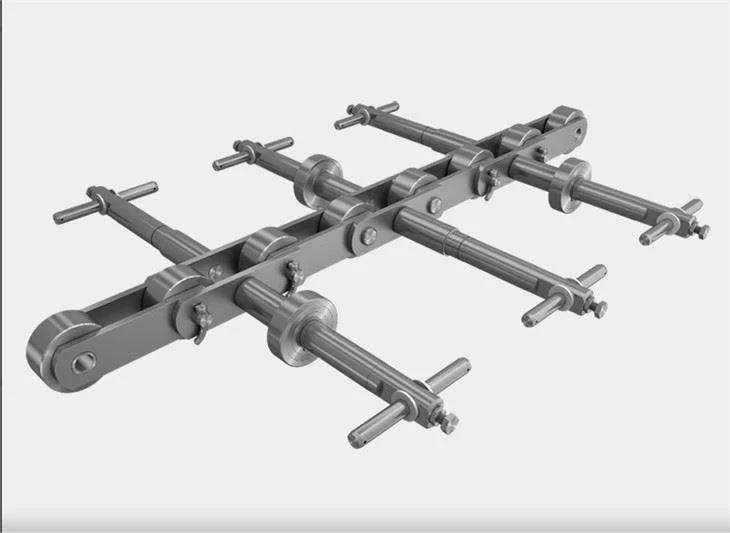
As a supplier of escalator chains, we offer a wide range of high - quality products to meet the needs of different escalator applications. Our Rubber Gloves Carrier Chains are designed with durability and reliability in mind. These chains are made from high - grade materials and are engineered to withstand the rigors of daily use.
Our Standard Escalator Chains are also a popular choice, offering a balance of performance and cost - effectiveness. They are suitable for a variety of escalator types and applications.
In addition, we also provide Rubber gloves carrier chains that are designed to provide smooth and efficient operation. These chains are equipped with special features to reduce wear and improve performance.
If you're experiencing problems with your escalator chains or are in need of high - quality replacement chains, we're here to help. Our team of experts can provide you with professional advice and solutions tailored to your specific needs. Contact us today to discuss your requirements and explore how our products can help you ensure the safe and reliable operation of your escalators.
References
- "Escalator and Moving Walk Handbook" by Werner Stracke
- "Mechanical Design of Machine Elements and Machines: A Failure - Prevention Perspective" by Robert C. Juvinall and Kurt M. Marshek
- Industry standards and guidelines for escalator maintenance and safety


