


Hey there! As a supplier of standard shafts, I've been in the game for quite a while. One question I get a lot is how to test the dynamic performance of a standard shaft. Well, I'm here to break it down for you in simple terms.
First off, let's talk about why testing the dynamic performance of a standard shaft is so important. A shaft is a crucial component in many mechanical systems. It transfers power, supports rotating parts, and helps maintain the stability of the whole setup. If a shaft doesn't perform well dynamically, it can lead to all sorts of problems, like vibrations, noise, and even premature failure of the entire system. So, getting an accurate read on its dynamic performance is key.
1. Initial Inspection
Before we start any fancy tests, we need to do a basic visual inspection of the shaft. Look for any obvious signs of damage, like cracks, dents, or uneven surfaces. A damaged shaft is likely to have poor dynamic performance right off the bat. Check the dimensions of the shaft as well. Make sure it meets the specified tolerances. Even a small deviation in size can affect how the shaft behaves under dynamic conditions.
2. Balancing Test
One of the most important aspects of a shaft's dynamic performance is its balance. An unbalanced shaft can cause excessive vibrations, which can damage other components in the system. To test the balance of a shaft, we use a balancing machine.
The process is pretty straightforward. First, we mount the shaft on the balancing machine. The machine then spins the shaft at a certain speed and measures the amount of unbalance. It can detect both static and dynamic unbalance. Static unbalance occurs when the center of gravity of the shaft is not on its axis of rotation. Dynamic unbalance is a bit more complex and involves unbalance in multiple planes along the shaft.
Based on the measurements from the balancing machine, we can add or remove weight from the shaft to correct the unbalance. This is usually done by drilling holes or adding weights to specific locations on the shaft. Once the shaft is balanced within the acceptable limits, we know it's going to perform better dynamically.
3. Vibration Testing
Vibration testing is another crucial step in evaluating the dynamic performance of a shaft. Excessive vibrations can indicate problems like misalignment, unbalance, or bearing issues.
To conduct a vibration test, we use vibration sensors, also known as accelerometers. These sensors are attached to the shaft at different locations. As the shaft rotates, the sensors measure the vibrations in terms of acceleration, velocity, and displacement.
We can analyze the vibration data using specialized software. The software can identify the frequency components of the vibrations. Different frequencies can be associated with different types of problems. For example, a high - frequency vibration might indicate a problem with the bearings, while a low - frequency vibration could be due to misalignment.
By monitoring the vibrations over time, we can also detect any changes in the shaft's performance. If the vibration levels start to increase, it could be a sign that something is going wrong, and we need to take corrective action.
4. Torque and Power Transmission Testing
A standard shaft is often used to transmit torque and power in a mechanical system. So, it's important to test how well it can handle these loads.
We can use a dynamometer to measure the torque and power transmitted by the shaft. The dynamometer is connected to the shaft, and it applies a load to the shaft while measuring the torque and rotational speed.
By varying the load and speed, we can create different operating conditions for the shaft. This allows us to evaluate its performance under various real - world scenarios. We can also calculate the efficiency of the shaft in transmitting power. A high - efficiency shaft means less energy is wasted in the form of heat or vibration.
5. Fatigue Testing
In many applications, a shaft is subjected to repeated loading over its lifetime. This can lead to fatigue failure, where the shaft cracks and eventually breaks.
To test the fatigue performance of a shaft, we use a fatigue testing machine. The machine applies a cyclic load to the shaft at a specific frequency. The load can be either a bending load or a torsional load, depending on the application of the shaft.

We keep applying the cyclic load until the shaft fails or reaches a certain number of cycles. By analyzing the number of cycles to failure, we can estimate the fatigue life of the shaft. This information is crucial for designing reliable mechanical systems.
Some of Our Standard Shaft Products
We offer a wide range of standard shafts to meet different customer needs. For example, we have the Spceial Sprocket With Long Welded Shaft. This shaft is designed for applications where a sprocket needs to be integrated with a long shaft, and it has been tested rigorously for its dynamic performance.
Another product is the Eccentric Shaft. Eccentric shafts are used in many mechanical systems to convert rotary motion into linear motion. Our eccentric shafts are made with high - quality materials and have excellent dynamic characteristics.
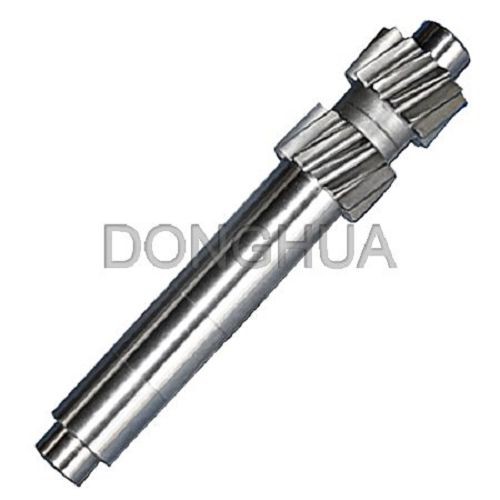
We also have the Axle Counter Shaft of Automobile Gear - Box. This shaft is a critical component in automobile gear - boxes, and its dynamic performance is essential for the smooth operation of the vehicle.
Contact Us for Procurement
If you're in the market for high - quality standard shafts, we'd love to hear from you. We have the expertise and the facilities to test the dynamic performance of our shafts to ensure they meet your requirements. Whether you need a small batch for a prototype or a large quantity for mass production, we can provide you with the right solution.
Just reach out to us, and we'll be happy to discuss your needs and provide you with a quote. We're committed to delivering top - notch products and excellent customer service.
References
- "Mechanical Engineering Design" by Joseph E. Shigley and Charles R. Mischke
- "Vibration Analysis for Rotating Machinery" by Robert B. Randall
- "Fatigue of Materials" by Norman E. Dowling


