


Selecting the appropriate bearing for a standard universal joint is crucial for ensuring smooth operation, longevity, and optimal performance of machinery. As a standard universal joint supplier, I've encountered various challenges and requirements from customers. In this blog, I'll share some insights on how to make the right bearing selection.
Understanding the Basics of Standard Universal Joints
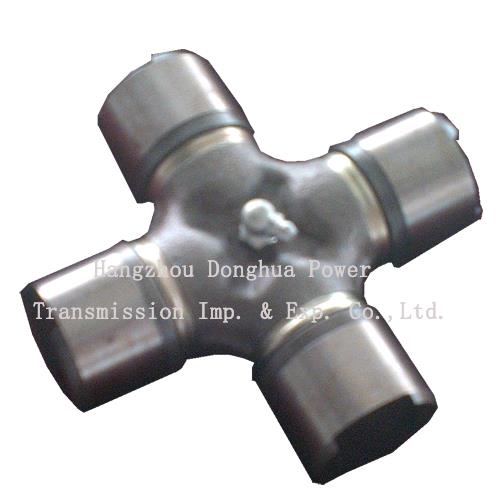
Before diving into bearing selection, it's essential to have a basic understanding of standard universal joints. These joints are used to transmit torque between two shafts that are not in a straight line. They consist of a cross-shaped yoke and bearings that allow for angular movement. The bearings play a vital role in reducing friction and enabling smooth rotation.
Factors to Consider When Selecting Bearings
Load Capacity
One of the most important factors to consider is the load capacity of the bearing. The bearing must be able to withstand the radial and axial loads applied to it during operation. You need to determine the maximum load that the universal joint will experience and choose a bearing with a sufficient load rating. For example, if you're using the universal joint in a heavy-duty application like a ANSI Standard Drive Shaft for Tractor, you'll need a bearing with a high load capacity.
Speed
The operating speed of the universal joint also affects bearing selection. High-speed applications require bearings with low friction and good heat dissipation properties. Bearings with a high-speed rating are designed to handle the centrifugal forces and heat generated at high speeds. On the other hand, if the universal joint operates at low speeds, you may have more flexibility in your bearing choice.
Lubrication
Proper lubrication is essential for bearing performance and longevity. Different types of bearings require different lubrication methods. Some bearings are pre-lubricated and sealed, while others need regular lubrication. Consider the operating environment and the ease of lubrication when choosing a bearing. For example, in a dirty or dusty environment, a sealed bearing may be a better choice to prevent contamination.
Operating Environment
The operating environment can have a significant impact on bearing performance. Factors such as temperature, humidity, and exposure to chemicals or corrosive substances need to be considered. In high-temperature environments, you'll need a bearing that can withstand the heat without losing its mechanical properties. Similarly, in corrosive environments, a bearing with corrosion-resistant materials or coatings is necessary.
Size and Fit
The size and fit of the bearing are also critical. The bearing must fit properly into the universal joint housing and match the shaft diameter. Using the wrong size bearing can lead to premature wear, noise, and even failure of the universal joint. Make sure to measure the housing and shaft dimensions accurately and choose a bearing that meets the specifications.
Types of Bearings for Standard Universal Joints
Ball Bearings
Ball bearings are one of the most common types of bearings used in universal joints. They consist of balls that roll between an inner and outer race. Ball bearings offer low friction, high-speed capabilities, and good radial load capacity. They are suitable for a wide range of applications, including automotive and industrial machinery. For example, the Universal Joint of Auto Parts often uses ball bearings for smooth operation.
Roller Bearings
Roller bearings use cylindrical or tapered rollers instead of balls. They can handle higher radial and axial loads compared to ball bearings. Roller bearings are commonly used in heavy-duty applications where high load capacity is required. However, they generally have a higher friction coefficient and may not be suitable for high-speed applications.
Needle Bearings
Needle bearings are a type of roller bearing with long, thin rollers. They have a high load capacity relative to their size and are often used in applications where space is limited. Needle bearings are commonly used in universal joints where a compact design is required. The Cross and Bearing Kit may include needle bearings for a more efficient and space-saving solution.
Making the Final Decision
Once you've considered all the factors and evaluated the different types of bearings, it's time to make the final decision. It's always a good idea to consult with a bearing expert or the manufacturer of the universal joint. They can provide valuable advice based on their experience and knowledge.
In addition, consider the cost and availability of the bearing. While it's important to choose a high-quality bearing, you also need to balance the cost with your budget. Look for a reliable supplier who can provide the bearing in a timely manner.
Conclusion
Selecting the appropriate bearing for a standard universal joint is a complex process that requires careful consideration of various factors. By understanding the load capacity, speed, lubrication, operating environment, and size requirements, you can make an informed decision. Whether you're using the universal joint in a tractor, an automotive application, or any other machinery, choosing the right bearing is essential for optimal performance and longevity.

If you're in the market for a standard universal joint or need help with bearing selection, feel free to reach out. We're here to assist you in finding the best solution for your specific needs. Let's start a conversation and explore how we can work together to meet your requirements.
References
- Machinery's Handbook, 31st Edition
- Bearing Engineering Handbook
- Universal Joint Manufacturer's Technical Guides


