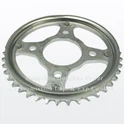
As a reputable supplier of standard sprockets, I understand the significance of accurate measurement when it comes to these essential components. Sprockets are used in a wide range of industries, from automotive to manufacturing, and getting the right size is crucial for optimal performance and safety. In this blog post, I will guide you through the process of measuring a standard sprocket, providing you with the knowledge and tools you need to make informed decisions.
Why Accurate Measurement Matters
Before we delve into the measurement process, let's first understand why accurate measurement is so important. A sprocket that is too small or too large can cause a variety of problems, including chain slippage, premature wear, and even equipment failure. By ensuring that your sprocket is the correct size, you can extend the lifespan of your chain and other components, reduce maintenance costs, and improve the overall efficiency of your machinery.
Tools You Will Need
To measure a standard sprocket accurately, you will need the following tools:
- Vernier caliper: This tool is used to measure the outside diameter (OD), bore diameter, and tooth thickness of the sprocket.
- Micrometer: A micrometer is more precise than a vernier caliper and is used to measure the pitch diameter of the sprocket.
- Chain pitch gauge: This tool is used to determine the pitch of the chain that the sprocket will be used with.
- Ruler or tape measure: You may need a ruler or tape measure to measure the overall width of the sprocket.
Step-by-Step Measurement Process
Step 1: Determine the Chain Pitch
The first step in measuring a sprocket is to determine the pitch of the chain that it will be used with. The pitch is the distance between the centers of two adjacent pins on the chain. You can use a chain pitch gauge to measure the pitch accurately. Simply place the gauge on the chain and align it with the pins. The gauge will indicate the pitch in inches or millimeters.
Step 2: Measure the Outside Diameter (OD)
The outside diameter (OD) of the sprocket is the diameter of the circle that passes through the tips of the teeth. To measure the OD, place the jaws of the vernier caliper on opposite sides of the sprocket, making sure that the caliper is perpendicular to the axis of the sprocket. Read the measurement on the caliper scale.
Step 3: Measure the Bore Diameter
The bore diameter is the diameter of the hole in the center of the sprocket. To measure the bore diameter, insert the jaws of the vernier caliper into the bore and open them until they touch the opposite sides of the bore. Read the measurement on the caliper scale.
Step 4: Measure the Tooth Thickness
The tooth thickness is the width of the tooth at the pitch diameter. To measure the tooth thickness, use the vernier caliper to measure the distance between the opposite sides of the tooth at the pitch diameter. Make sure that the caliper is perpendicular to the axis of the sprocket.
Step 5: Measure the Pitch Diameter
The pitch diameter is the diameter of the circle that passes through the centers of the chain pins when the chain is wrapped around the sprocket. Measuring the pitch diameter accurately is crucial for ensuring proper chain engagement. To measure the pitch diameter, you can use a micrometer. Place the micrometer on the sprocket and measure the distance between the opposite sides of the sprocket at the pitch diameter.
Step 6: Measure the Overall Width
The overall width of the sprocket is the distance between the two sides of the sprocket. You can use a ruler or tape measure to measure the overall width.
Calculating the Number of Teeth
In addition to measuring the physical dimensions of the sprocket, you may also need to determine the number of teeth. The number of teeth on a sprocket is an important factor in determining its speed ratio and torque transmission capabilities. You can count the number of teeth on the sprocket manually or use a tooth counting tool.
Using the Measurements
Once you have measured the sprocket, you can use the measurements to select the appropriate chain and ensure proper installation. Make sure that the chain pitch matches the pitch of the sprocket, and that the bore diameter is compatible with the shaft size. If you are unsure about any of the measurements or need assistance in selecting the right sprocket, contact us for expert advice.
Common Measurement Errors and How to Avoid Them
Measuring a sprocket accurately requires precision and attention to detail. Here are some common measurement errors and how to avoid them:
- Using the wrong tool: Make sure that you are using the correct tool for each measurement. For example, use a micrometer for measuring the pitch diameter, as it is more precise than a vernier caliper.
- Not measuring at the correct location: When measuring the OD, bore diameter, and tooth thickness, make sure that you are measuring at the correct location. For example, the OD should be measured at the tips of the teeth, and the tooth thickness should be measured at the pitch diameter.
- Not taking multiple measurements: To ensure accuracy, take multiple measurements of each dimension and calculate the average. This will help to reduce the impact of any measurement errors.
- Failing to account for wear: If the sprocket is worn, the measurements may not be accurate. In this case, you may need to replace the sprocket or take additional measurements to account for the wear.
Conclusion
Measuring the size of a standard sprocket is a crucial step in ensuring proper performance and safety. By following the steps outlined in this blog post and using the right tools, you can measure the sprocket accurately and select the appropriate chain and other components. If you have any questions or need further assistance, contact us and our team of experts will be happy to help.
Additional Resources
If you are interested in learning more about sprockets and their applications, here are some additional resources that you may find useful:


- Spray-Paint Sprockets: This page provides information about spray-paint sprockets and their benefits.
- B Type Roller Chain Sprockets: Learn more about B type roller chain sprockets and their uses.
- Standard Steel Chain Wheel Sprocket: Discover the features and advantages of standard steel chain wheel sprockets.
References
- "Sprocket Design and Selection Guide," Machinery's Handbook, 31st Edition.
- "Chain Drives: Selection and Application," American Chain Association.