


As a supplier of Standard Universal Joints, I understand the critical role that wear resistance plays in the performance and longevity of these essential components. In this blog, I'll share some professional insights on how to enhance the wear resistance of Standard Universal Joints, drawing from my years of experience in the industry.
Understanding the Importance of Wear Resistance
Before delving into the methods of improving wear resistance, it's crucial to understand why it matters. Standard Universal Joints are widely used in various mechanical systems, including automotive and industrial applications. They transmit torque between non - collinear shafts while allowing for angular misalignment. During operation, the joints are subjected to high loads, friction, and continuous movement, which can lead to wear over time. Reduced wear resistance can result in decreased performance, increased maintenance costs, and even system failures. Therefore, enhancing wear resistance is essential for ensuring the reliability and efficiency of these joints.

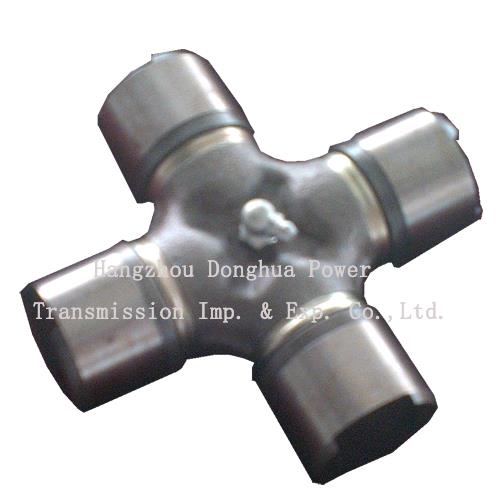
Material Selection
One of the most fundamental ways to improve wear resistance is through proper material selection. High - quality materials with excellent mechanical properties can significantly enhance the joint's ability to withstand wear.
- Alloy Steels: Alloy steels are a popular choice for Standard Universal Joints. They offer a good balance of strength, hardness, and toughness. For example, steels alloyed with elements such as chromium, nickel, and molybdenum can have improved wear resistance compared to plain carbon steels. Chromium can form a hard and protective oxide layer on the surface, while nickel enhances the toughness of the steel. Molybdenum improves the hardenability and strength of the alloy.
- Stainless Steels: In applications where corrosion resistance is also a concern, stainless steels can be used. Austenitic stainless steels, such as 304 and 316, have good corrosion resistance, but their wear resistance can be improved through surface treatments. Martensitic stainless steels, on the other hand, can be heat - treated to achieve high hardness and wear resistance, making them suitable for more demanding applications.
- Advanced Materials: Some advanced materials, such as ceramics and composites, are also being explored for use in Universal Joints. Ceramics have extremely high hardness and wear resistance, but they are brittle and may require special design considerations. Composites can offer a combination of properties, such as high strength - to - weight ratio and good wear resistance.
Heat Treatment
Heat treatment is a critical process for improving the wear resistance of Standard Universal Joints. It can modify the microstructure of the material, thereby enhancing its hardness and strength.
- Quenching and Tempering: This is a common heat - treatment process for steel Universal Joints. Quenching involves rapidly cooling the heated steel to transform its microstructure into martensite, which is very hard. However, martensite is also brittle, so tempering is then performed to reduce the brittleness and improve the toughness of the material. The combination of quenching and tempering can result in a material with high hardness and good wear resistance.
- Case Hardening: Case hardening is another effective method. Processes like carburizing, nitriding, and carbonitriding can create a hard outer layer (case) on the surface of the joint while maintaining a tough core. Carburizing involves introducing carbon into the surface of the steel at high temperatures, followed by quenching and tempering. Nitriding introduces nitrogen into the surface, forming hard nitride compounds. Carbonitriding combines the effects of carburizing and nitriding. These processes can significantly improve the wear resistance of the joint's surface.
Surface Treatments
Surface treatments can further enhance the wear resistance of Standard Universal Joints by creating a protective layer on the surface.
- Coatings: There are various types of coatings that can be applied to Universal Joints. For example, ceramic coatings can provide a hard and wear - resistant surface. They can reduce friction and protect the underlying material from wear. Another option is PVD (Physical Vapor Deposition) coatings, which can deposit thin, hard coatings such as titanium nitride (TiN) or chromium nitride (CrN) on the surface. These coatings have excellent wear and corrosion resistance.
- Plating: Electroplating is a common surface - treatment method. For instance, nickel plating can improve the corrosion and wear resistance of the joint. Hard chrome plating is also used in some applications due to its high hardness and low friction coefficient.
Lubrication
Proper lubrication is essential for reducing wear in Standard Universal Joints. Lubricants can reduce friction between moving parts, dissipate heat, and prevent direct metal - to - metal contact.
- Grease Lubrication: Grease is a commonly used lubricant for Universal Joints. It has good adhesion properties and can stay in place for longer periods. When selecting grease, factors such as temperature range, load - carrying capacity, and water resistance should be considered. High - quality greases with additives, such as anti - wear agents and extreme - pressure additives, can provide better protection against wear.
- Oil Lubrication: In some high - speed or high - load applications, oil lubrication may be more suitable. Oil can provide better cooling and can be circulated to remove heat from the joint. The viscosity of the oil should be selected based on the operating conditions of the joint.
Design Optimization
The design of the Standard Universal Joint can also have a significant impact on its wear resistance.
- Geometry: Optimizing the geometry of the joint can reduce stress concentrations and improve load distribution. For example, proper fillet radii at critical points can reduce the likelihood of crack initiation and propagation. The shape of the bearing surfaces can also be designed to ensure uniform contact and reduce wear.
- Clearance: Appropriate clearances between the components of the joint are crucial. Too little clearance can cause excessive friction and wear, while too much clearance can lead to vibration and impact loading, which also contribute to wear.
Quality Control
Ensuring high - quality manufacturing processes and strict quality control are essential for producing Standard Universal Joints with good wear resistance.
- Inspection: Regular inspection during the manufacturing process can detect any defects or deviations from the design specifications. Non - destructive testing methods, such as ultrasonic testing and magnetic particle testing, can be used to detect internal flaws. Dimensional inspection can ensure that the joints meet the required tolerances.
- Testing: Before the joints are shipped, they should undergo rigorous testing. This can include performance testing under simulated operating conditions to evaluate their wear resistance and durability.
Conclusion
Improving the wear resistance of Standard Universal Joints is a multi - faceted process that involves material selection, heat treatment, surface treatments, lubrication, design optimization, and quality control. By implementing these strategies, we can produce Universal Joints that offer long - lasting performance and reliability.
As a supplier, we are committed to providing high - quality Standard Universal Joints with excellent wear resistance. If you are in the market for Universal Joints, we invite you to explore our product range. You can find more information about our products at the following links:
Universal Joint Of Auto Parts Universal Joint
ANSI Standard Painted Universal Joint Fork Tu Yuan Fork
Universal Joint of Auto Parts
If you have any questions or are interested in purchasing our Standard Universal Joints, please feel free to contact us for further discussion. We look forward to serving your needs.
References
- ASM Handbook Volume 4: Heat Treating. ASM International.
- Metals Handbook Desk Edition, 3rd Edition. ASM International.
- Tribology Handbook, 2nd Edition. Elsevier.


