


Hey there! I'm a supplier of standard shafts, and I know how crucial wear resistance is for these components. In this blog, I'm gonna share some practical ways to improve the wear resistance of a standard shaft.
First off, let's understand why wear resistance matters. A standard shaft is used in all sorts of machinery, from small gadgets to big industrial equipment. When it wears out, it can lead to all kinds of problems, like decreased efficiency, more maintenance, and even complete breakdowns. So, improving its wear resistance can save a lot of time and money in the long run.
Material Selection
The material you choose for your standard shaft plays a huge role in its wear resistance. High - quality steels are often a top choice. For example, alloy steels with elements like chromium, nickel, and molybdenum can significantly enhance the shaft's hardness and toughness. Chromium, in particular, forms a hard and protective oxide layer on the surface of the shaft, which helps resist wear.
Another option is stainless steel. It not only has good corrosion resistance but also decent wear resistance. Stainless steel shafts are great for applications where the shaft might be exposed to moisture or corrosive substances.
There are also some non - metallic materials that can be used for shafts in specific applications. For instance, ceramics have extremely high hardness and wear resistance. However, they are brittle and can be difficult to machine, so they're usually used in applications where the loads are relatively light and the operating conditions are stable.
Heat Treatment
Heat treatment is a powerful technique to improve the wear resistance of a standard shaft. One common method is quenching and tempering. Quenching involves heating the shaft to a high temperature and then rapidly cooling it. This process forms a hard martensitic structure in the steel, which increases its hardness and wear resistance.
After quenching, tempering is done to relieve the internal stresses created during quenching and to improve the toughness of the shaft. The tempering temperature and time can be adjusted depending on the specific requirements of the application.
Another heat treatment method is case hardening. This involves adding carbon or nitrogen to the surface layer of the shaft to create a hard case while keeping the core relatively soft and tough. Carburizing is a type of case hardening where the shaft is heated in a carbon - rich environment. The carbon diffuses into the surface of the shaft, and then it's quenched to form a hard, wear - resistant layer. Nitriding is similar, but it uses nitrogen instead of carbon.
Surface Coating
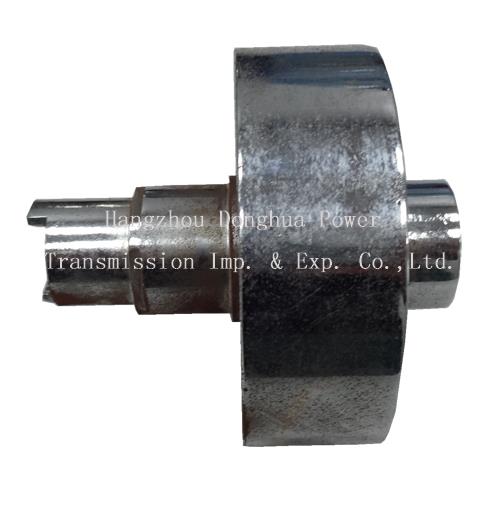
Surface coating is an effective way to enhance the wear resistance of a standard shaft. One popular coating is nickel plating. Nickel - plated shafts, like the Nickel Plating Flange With Shafts, have a smooth and hard surface that can reduce friction and wear. The nickel layer also provides some corrosion protection.
There are also other types of coatings, such as titanium nitride (TiN) coatings. TiN coatings are extremely hard and have low friction coefficients. They can significantly improve the wear resistance of the shaft, especially in high - load and high - speed applications.
Diamond - like carbon (DLC) coatings are another option. DLC coatings have excellent wear resistance, low friction, and good chemical stability. They're often used in applications where the shaft needs to operate in harsh environments.
Lubrication
Proper lubrication is essential for reducing wear on a standard shaft. Lubricants can form a thin film between the shaft and its mating parts, which reduces friction and prevents direct metal - to - metal contact.
There are different types of lubricants available, including oils and greases. Oil lubrication is suitable for high - speed applications as it can provide better cooling and can flow more easily. Grease lubrication, on the other hand, is more suitable for low - speed and sealed applications as it can stay in place better.
The choice of lubricant also depends on the operating conditions. For example, in high - temperature applications, a lubricant with a high flash point and good thermal stability is required. In applications where the shaft is exposed to water or other contaminants, a water - resistant lubricant is needed.
Design Optimization
The design of the standard shaft can also affect its wear resistance. For example, the surface finish of the shaft is important. A smoother surface finish can reduce friction and wear. So, it's important to use proper machining techniques to achieve a good surface finish.
The geometry of the shaft is also crucial. For instance, a shaft with a larger diameter can generally withstand higher loads and is less likely to wear out quickly. However, increasing the diameter might not always be practical due to space and cost constraints.
The fit between the shaft and its mating parts should also be carefully designed. A proper fit can ensure that the load is evenly distributed across the shaft surface, which reduces the risk of concentrated wear.
Maintenance
Regular maintenance is key to ensuring the long - term wear resistance of a standard shaft. This includes checking the shaft for signs of wear, such as scoring, pitting, or excessive play. If any signs of wear are detected, appropriate measures should be taken, such as replacing the shaft or performing repairs.
It's also important to keep the shaft clean and free from contaminants. Contaminants like dirt, dust, and metal particles can act as abrasives and accelerate wear. So, proper sealing and filtration systems should be in place to prevent contaminants from reaching the shaft.
In addition, the lubricant should be regularly changed according to the manufacturer's recommendations. Over time, the lubricant can break down and lose its effectiveness, which can lead to increased wear.
Real - World Applications
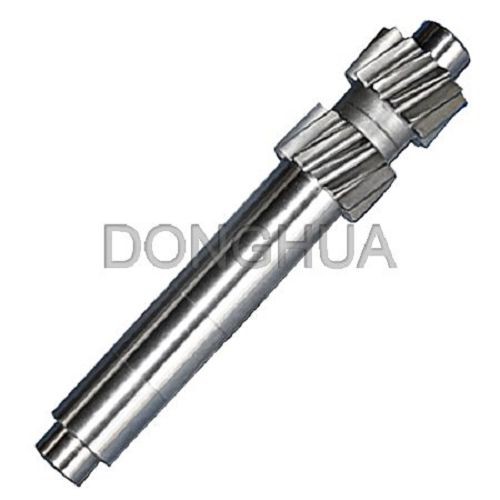
Let's take a look at some real - world applications where these techniques for improving wear resistance are used. In the automotive industry, standard shafts are used in various components, such as the Axle Counter Shaft of Automobile Gear - Box. These shafts are subject to high loads and speeds, so they need to have excellent wear resistance. Heat treatment and surface coating are commonly used to improve their performance.
In the agricultural sector, the Axle Driving Gear of Wheeled Tractor Gear - Box also requires high wear resistance. The shafts in these applications are often exposed to dirt, dust, and harsh operating conditions. Proper lubrication and design optimization are crucial to ensure their long - term reliability.
In conclusion, improving the wear resistance of a standard shaft involves a combination of material selection, heat treatment, surface coating, lubrication, design optimization, and maintenance. By implementing these techniques, you can significantly extend the lifespan of the shaft and reduce the risk of failures.
If you're in the market for high - quality standard shafts or have any questions about improving their wear resistance, feel free to reach out. We're here to help you find the best solutions for your specific needs.
References
- Smith, J. (2018). "Materials Science for Engineers". McGraw - Hill.
- Jones, A. (2020). "Lubrication Handbook". Elsevier.
- Brown, R. (2019). "Mechanical Design: Principles and Applications". Wiley.


