


As a supplier of standard universal joints, I often encounter inquiries about the diverse applications of our products. One question that has piqued my interest is whether a standard universal joint can be used in medical equipment. In this blog post, I will delve into this topic, exploring the technical aspects, potential benefits, and challenges associated with using standard universal joints in the medical field.
Understanding Standard Universal Joints
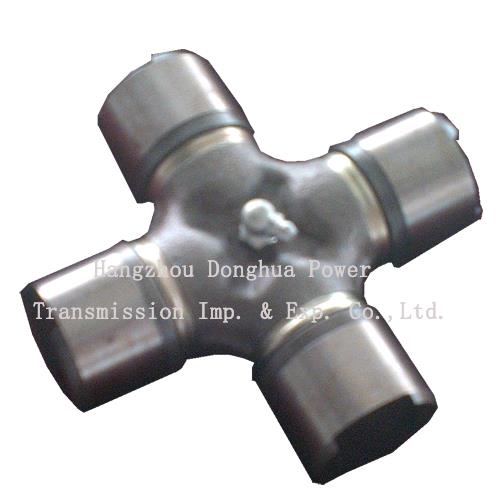
Before we discuss their applicability in medical equipment, let's first understand what standard universal joints are. A standard universal joint, also known as a Hooke's joint, is a mechanical coupling that allows two shafts to rotate at an angle to each other. It consists of a cross-shaped yoke with four trunnions, which are connected to the shafts through bearings. This design enables the transmission of torque between the shafts while accommodating angular misalignment.
Standard universal joints are widely used in various industries, including automotive, aerospace, and manufacturing. They are known for their simplicity, reliability, and ability to handle high torque loads. Some common applications of standard universal joints include Cross and Bearing Kit, Universal Joint of Auto Parts, and Universal Joint Of Auto Parts Universal Joint.
Potential Applications in Medical Equipment
The medical industry demands high precision, reliability, and safety in its equipment. While standard universal joints are not typically the first choice for medical applications, there are several scenarios where they could potentially be used:

Surgical Robots
Surgical robots are becoming increasingly popular in modern medicine, offering greater precision and control during minimally invasive procedures. These robots often require multiple joints to mimic the movement of the human hand. Standard universal joints could be used in the robotic arms to provide the necessary flexibility and range of motion. Their ability to transmit torque at an angle would allow the robot to reach different positions within the patient's body.
Diagnostic Equipment
Diagnostic equipment, such as X-ray machines and ultrasound scanners, often requires precise positioning of the imaging sensors. Standard universal joints could be used to adjust the angle and orientation of the sensors, ensuring accurate and clear images. Their simplicity and reliability would make them a cost-effective solution for these applications.
Rehabilitation Devices
Rehabilitation devices, such as exoskeletons and prosthetics, aim to assist patients in regaining mobility and functionality. These devices often require joints that can mimic the natural movement of the human body. Standard universal joints could be used in the joints of these devices to provide the necessary flexibility and range of motion. Their ability to handle high torque loads would make them suitable for supporting the weight of the patient's limb.
Benefits of Using Standard Universal Joints in Medical Equipment
There are several benefits to using standard universal joints in medical equipment:
Cost-Effectiveness
Standard universal joints are relatively inexpensive compared to other types of joints, such as harmonic drives and ball joints. This makes them a cost-effective solution for medical equipment manufacturers, especially for applications where high precision is not required.
Simplicity and Reliability
Standard universal joints have a simple design with few moving parts, which makes them easy to manufacture, install, and maintain. Their reliability is well-established in various industries, and they can withstand high torque loads and harsh operating conditions.
Availability
Standard universal joints are widely available in the market, which makes it easy for medical equipment manufacturers to source them. This reduces the lead time and cost associated with custom-made joints.
Challenges and Considerations
While there are potential benefits to using standard universal joints in medical equipment, there are also several challenges and considerations that need to be addressed:
Precision and Accuracy
Medical equipment often requires high precision and accuracy to ensure the safety and effectiveness of the treatment. Standard universal joints have some inherent limitations in terms of precision and accuracy, such as backlash and angular error. These limitations need to be carefully considered and compensated for in the design of the medical equipment.
Biocompatibility
Medical equipment that comes into contact with the human body needs to be biocompatible to avoid any adverse reactions. Standard universal joints are typically made of metal, which may not be biocompatible. Therefore, appropriate coatings or materials need to be used to ensure the biocompatibility of the joints.
Sterilization
Medical equipment needs to be sterilized regularly to prevent the spread of infections. Standard universal joints may be difficult to sterilize due to their complex design and the presence of lubricants. Therefore, special considerations need to be taken to ensure the sterility of the joints.
Regulatory Compliance
Medical equipment is subject to strict regulatory requirements to ensure its safety and effectiveness. Standard universal joints used in medical equipment need to comply with these regulations, such as the ISO 13485 medical device quality management system standard and the FDA's medical device regulations.
Conclusion
In conclusion, while standard universal joints are not typically the first choice for medical applications, there are several scenarios where they could potentially be used. Their cost-effectiveness, simplicity, reliability, and availability make them an attractive option for some medical equipment manufacturers. However, the challenges and considerations associated with their use, such as precision, biocompatibility, sterilization, and regulatory compliance, need to be carefully addressed.
If you are a medical equipment manufacturer interested in exploring the use of standard universal joints in your products, I encourage you to contact me for more information. I would be happy to discuss your specific requirements and provide you with a customized solution. Let's work together to develop innovative and cost-effective medical equipment that meets the highest standards of quality and safety.
References
- ISO 13485:2016, Medical devices -- Quality management systems -- Requirements for regulatory purposes.
- FDA, Medical Device Regulations.


